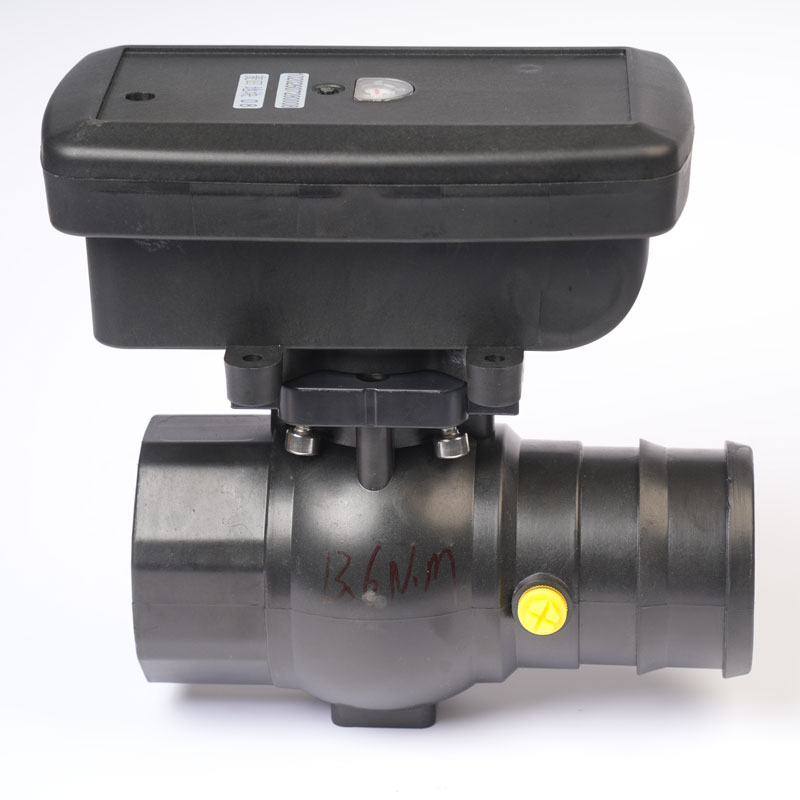
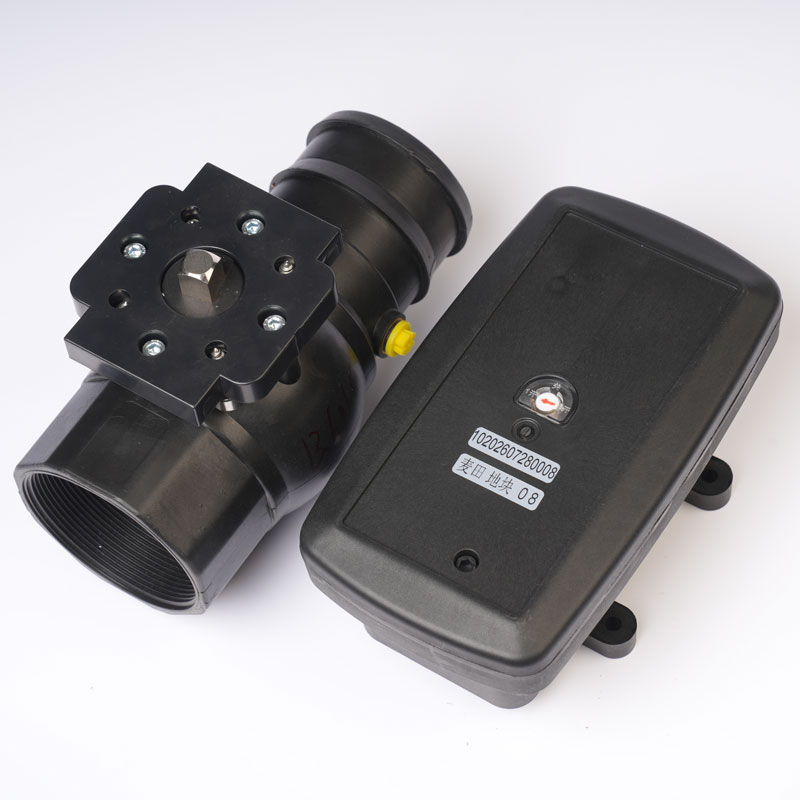
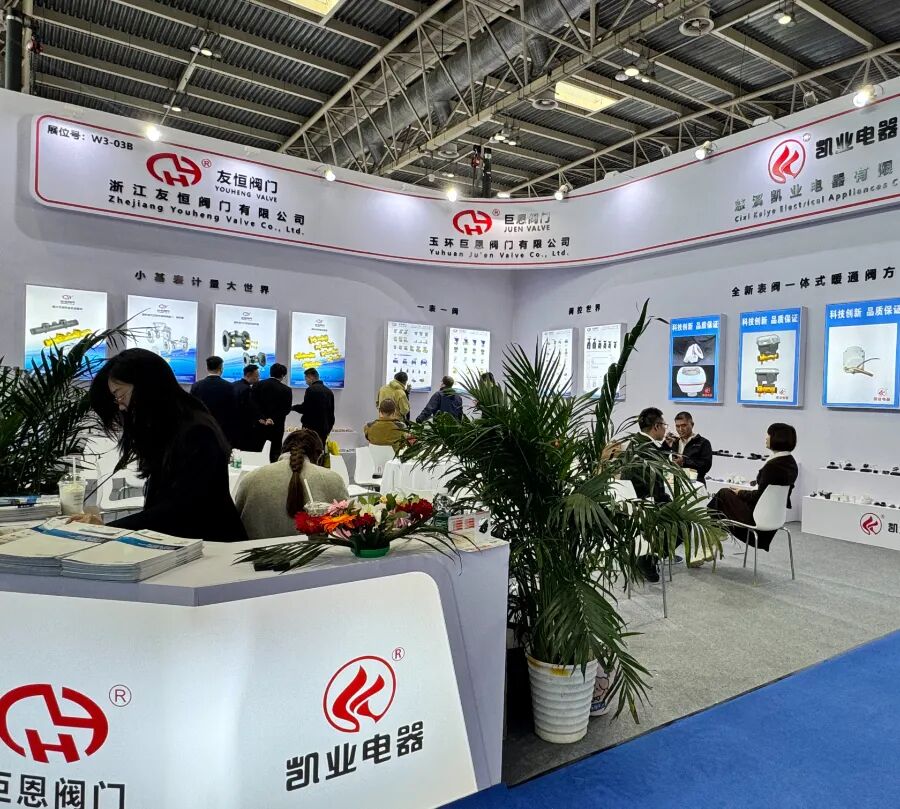
A Kaiye smart irrigation valve turns a manually operated mainline into a managed watering zone. Each unit pairs a 3.6 V lithium-powered, IP65 motorised actuator with either a 4G cellular module or a long-range LoRa radio, so an operator can open, close or partially open a DN80–DN100 valve from a phone or a farm platform — and receive confirmation that the valve actually moved.
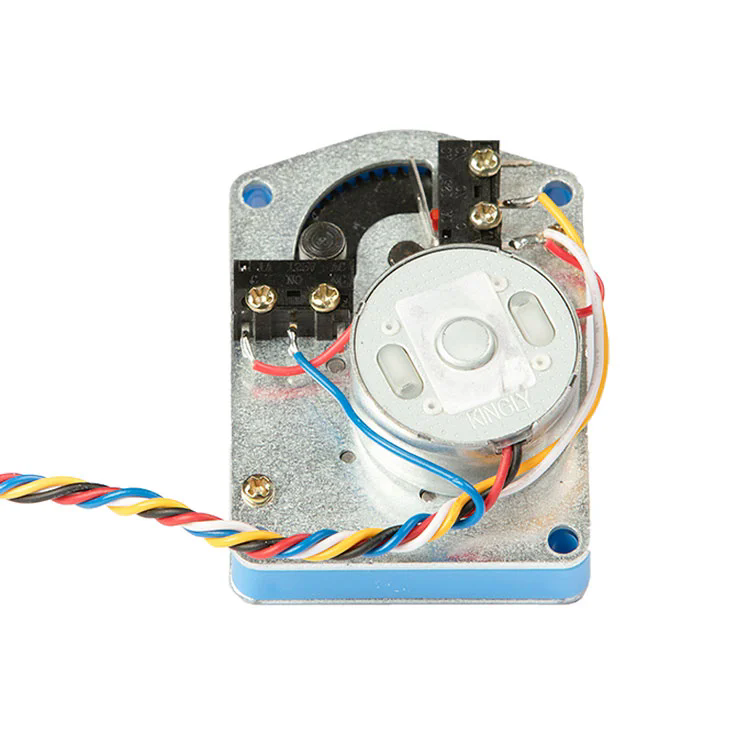
Valves can run scheduled zonal programmes, respond to soil-moisture and weather data, report flow and pressure faults, and fall back to a manual override handle when the network is down. The gear train inside is the same machined-metal architecture Kaiye has supplied to water-meter and HVAC customers since 1991, now built into an IP65 enclosure for unattended field service. Choose 4G where valves are scattered and cellular coverage exists; choose LoRa where dozens or hundreds of valves share one site and one gateway.
The mechanics are identical; only the uplink changes. That means a project can start with 4G on a single remote plot and later scale to a LoRa cluster without retraining the operator or rewriting the platform integration.
| Compare | 4G Smart Irrigation Valve | LoRa Irrigation Valve |
|---|---|---|
| Uplink | 4G LTE cellular, SIM inside the actuator | Sub-GHz LoRa, private network |
| Site hardware | None — no gateway, no field controller | One gateway per site or cluster |
| Running cost | One data plan per valve | No per-valve data plan; gateway backhaul only |
| Best for | Scattered plots, single remote valves, sites with good mobile coverage | Dense clusters — orchards, blocks, greenhouse ranges, sites with weak cellular |
| Scales to | Add valves anywhere there is signal | Hundreds of valves through a single gateway |
| Power | 3.6 V lithium pack, 5+ years typical | 3.6 V lithium pack, multi-season |
No gateway to build, no line-of-sight to plan. Insert a SIM, commission the valve, and it reports to your platform from any plot with cellular coverage. Ideal for single valves, rented land and dispersed plots.
One gateway, hundreds of valves, no per-valve SIM plan and no dependence on mobile coverage. Built for large farms, orchard blocks and municipal green belts controlled as zones, not as individual valves.
A solenoid pilot valve is cheap, but it needs line pressure to operate, cannot hold a partially open position, and gives no confirmation that it moved. These are motorised quarter-turn valves: the actuator drives the stem directly and reports where it stopped.
Every metal gear is cut, not sintered. An 18,000:1 reduction converts a small motor into ≥40 N·m at the stem — enough breakaway torque for a DN100 valve under full line pressure.
The motor is energised only during a stroke, and no-load draw stays at ≤100 mA at 23 °C. A 3.6 V lithium pack is rated for more than five years on a normal irrigation schedule; solar top-up is optional.
Position, fault and battery status return to the platform after every command, so “irrigated” is a confirmed state rather than an assumption. Leaks and bursts surface as flow and pressure anomalies.
Every actuator keeps a mechanical manual function. Commissioning, power-up testing and emergency operation never depend on a charged battery or a working network.
Soil moisture, weather, pressure and flow sensors join the same account as the valves. Irrigation then becomes a feedback loop: the platform opens a zone, watches the response, and closes it when the field has had enough water.
Valve actuators are our own product, not a traded item, so a change in cable length or stem interface is an engineering task rather than a supply-chain problem.
| Item | Standard | Customisable |
|---|---|---|
| Valve interface | DN80, DN100 | Stem adapter, flange pattern, other sizes on request |
| Cable & connector | 5-core, 1 m flying lead | Length, gauge, connector, line sequence |
| Housing | IP65, standard colour | Colour, laser logo, label and nameplate |
| Firmware | Kaiye standard protocol | MQTT / HTTP / Modbus RTU, private protocol, platform API |
| Position feedback | End-position only | Photoelectric pulse counting for multi-angle control, or magnet |
| Power | 3.6 V lithium pack | Solar input, pack capacity, external DC |
| Packaging | Neutral carton | Branded carton, pallet, retail-ready set |
Typical OEM programmes start at 500 sets, with 15–25 working days after sample approval. Sample valves are available for platform and field testing before a volume commitment.
A motorised quarter-turn valve with an integrated actuator, battery and radio. It replaces manual operation of a mainline or zone valve: the actuator drives the stem, reports position back to a platform, and can be commanded remotely or by schedule. Unlike a solenoid valve, it does not need line pressure to change state and it can hold a partial opening.
Count the valves on the site and check the mobile signal. One valve, or a handful of valves on separate plots: 4G, because there is no gateway to build. Fifty valves in one orchard block, or a site with weak cellular coverage: LoRa, because one gateway serves the cluster and there is no per-valve data plan.
Yes. Both variants run from an internal 3.6 V lithium pack with a 2.5–5 V working range. The motor draws current only while the valve is moving. A solar input can be added where cycle counts are high or where winter temperatures cut pack capacity.
DN80 and DN100 as standard, matching the 18,000:1 reduction and ≥40 N·m output. Other sizes and stem interfaces are engineering items — send the valve drawing and we will confirm feasibility before quotation.
Yes, in one of three ways: run Kaiye's dashboard directly, connect through our HTTP/MQTT API, or take a private protocol specification for your own gateway and cloud. We also supply OEM builds where the valve appears under your brand inside your platform.
The valve holds its current position. A mechanical manual override lets an operator open or close it on site, and the platform raises an offline or low-battery alarm before the pack is exhausted. Scheduled programmes resume automatically when the link returns.
No, and we would rather say so. IP65 means protection against dust and water jets from any direction — it is not a submersible rating. Mount the actuator above grade, in a riser box, or in a chamber with drainage. If your installation floods, specify the submersible variant instead.
Standard OEM programmes start at 500 sets; lead time is 15–25 working days after sample approval. Sample units ship earlier for platform integration and field trials.